


Europe’s shortage of programmers is no longer a future risk
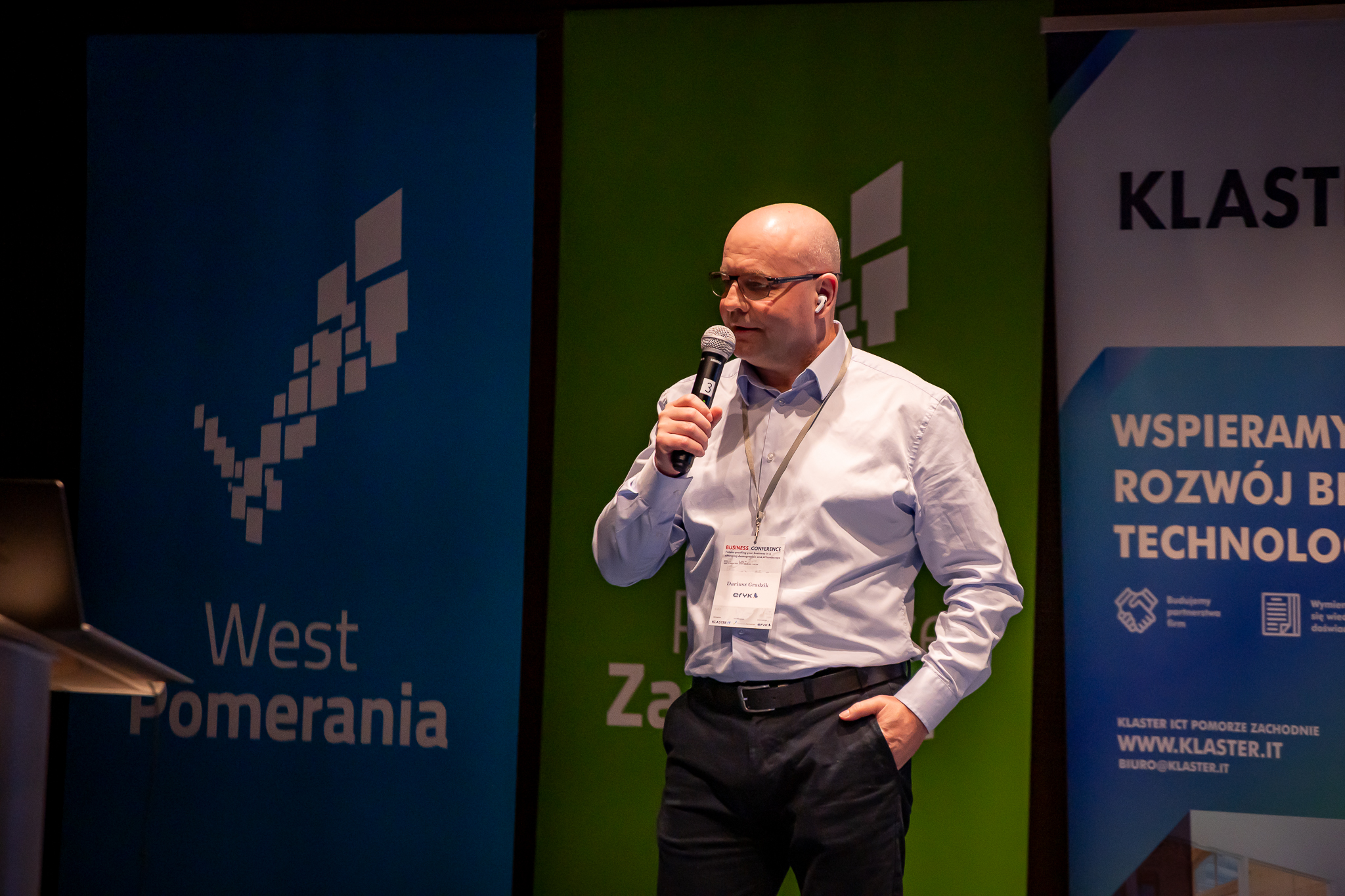
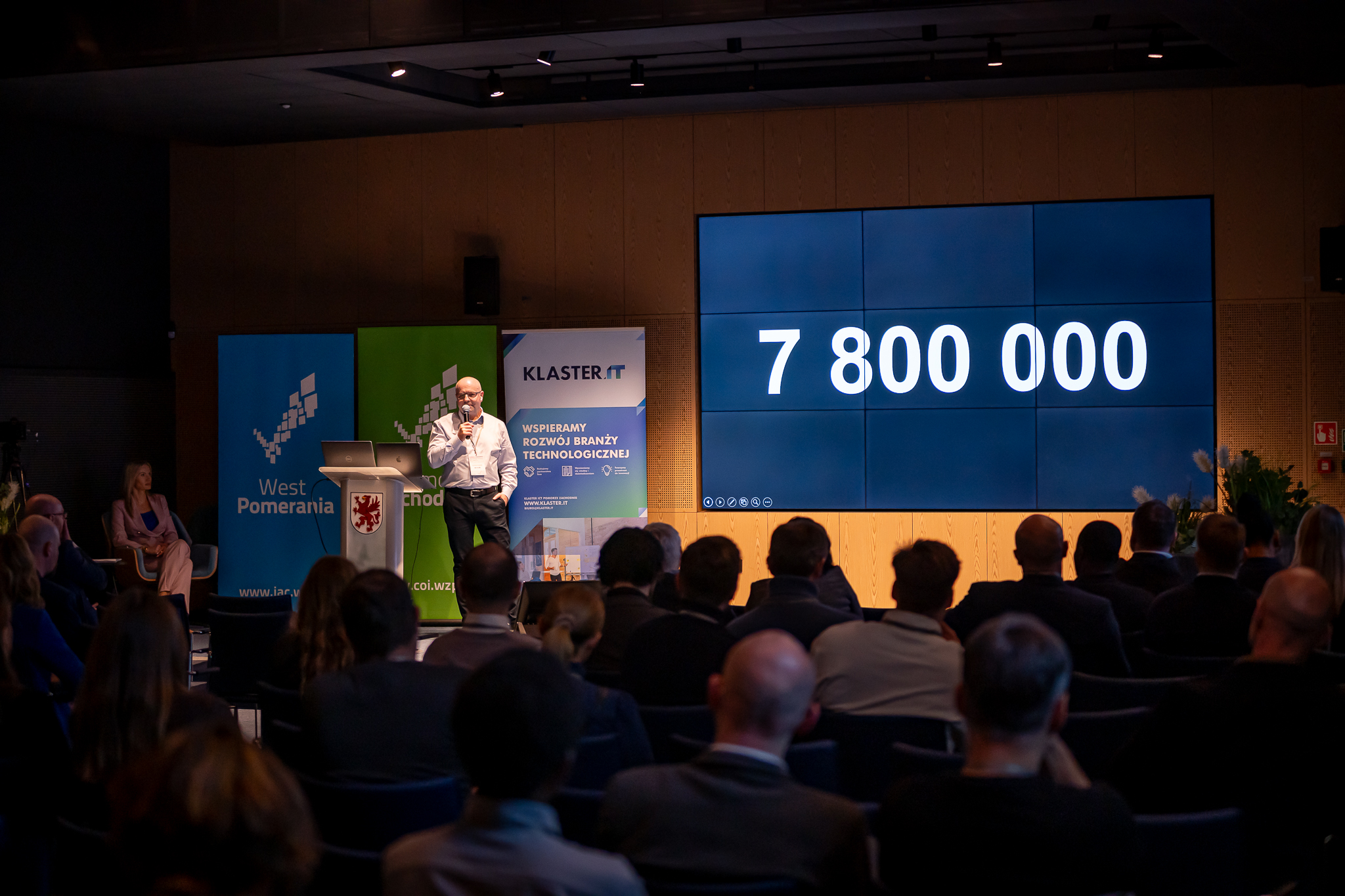
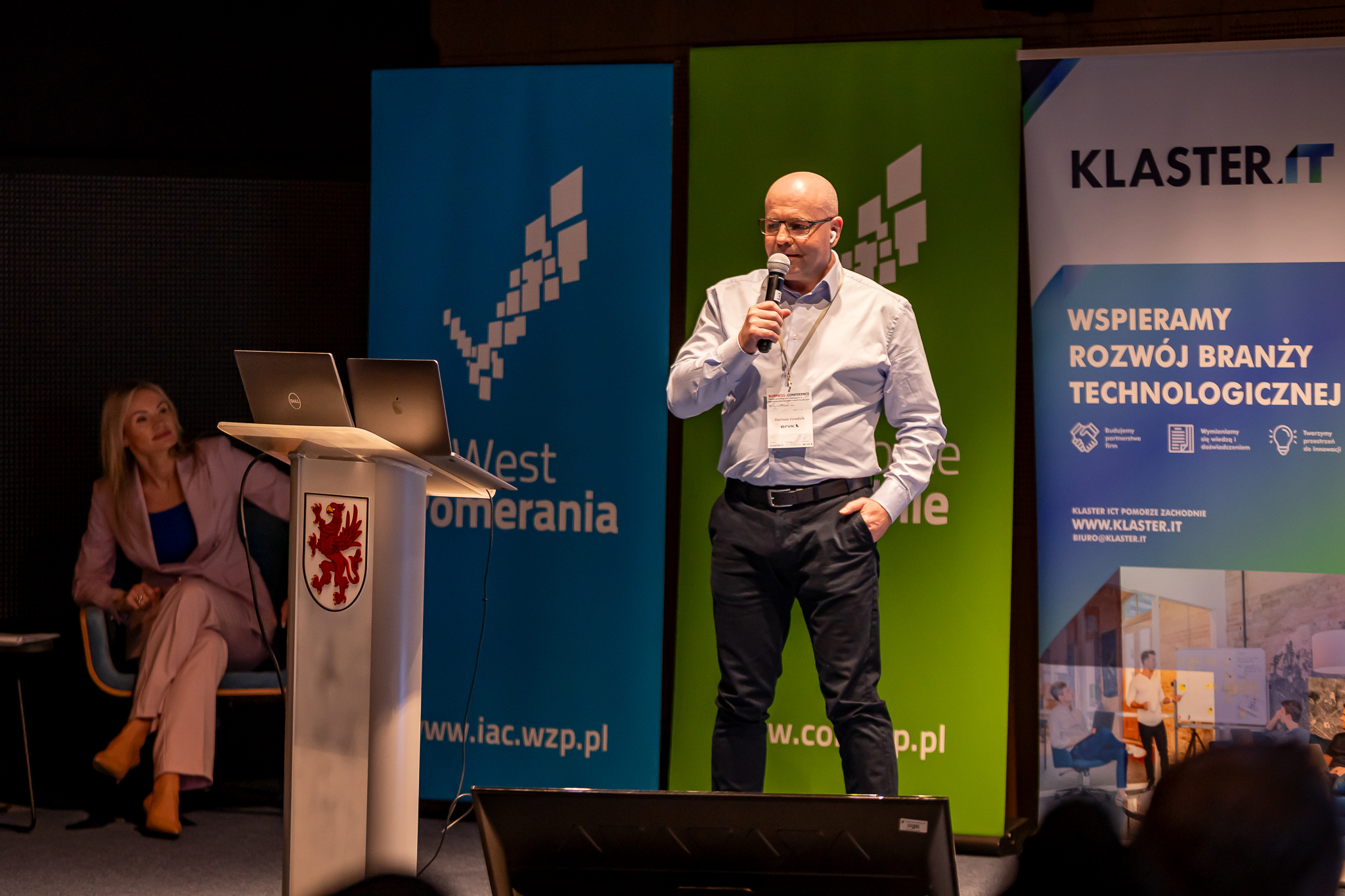
At the international conference “Future-proofing Your Business in a Changing Demographic and AI Landscape,” jointly organized by Eryk and Klaster IT the Center for Economic Initiatives, held on March 31, 2026, one message stood out with unusual clarity: Europe’s IT talent challenge is no longer cyclical. It is structural. Speaking during the event, Dariusz outlined why the shortage of programmers in Europe is set to deepen, and why European businesses need to rethink where and how they build IT capacity. His case was not built on one isolated trend, but on the collision of demographics, hiring friction, AI acceleration, and an increasingly narrow cloud talent market.
Why Europe’s shortage of programmers is getting worse
Dariusz’s argument rested on one central point: several pressures are now converging at once. Europe’s working-age population is projected to shrink by 505m to 500m by 2050. Germany alone is expected to lose 11 million potential workers, while Spain and Italy each lose between 7 to 8 million. At the same time, fertility remains far below the replacement level, meaning each new labour-market cohort is smaller than the one before it.
He also pointed to flaws inside the hiring market itself. In Poland, 42% of IT job postings do not include salary information (Polish IT Job Market Report, Q1 2026), creating friction and distrust in a market where top candidates move quickly. Contract structure is another barrier. Around 67% of Polish IT roles are offered through B2B contracts, which carry a median pay premium of 53% over permanent employment. Companies that insist only on traditional contracts are therefore competing for a much smaller share of the market. Geographic concentration adds further strain. More than half of Polish IT job postings are in Warsaw, leaving talent in secondary cities underused.
The broader economic signal is just as serious. Productivity growth in Europe has already fallen sharply, from 1.7% in the 1990s to 0.3% after 2008. In this view, the issue is not simply a technology gap. It is a workforce gap.
Cloud and AI will intensify the pressure
If the current market is tight, Dariusz’s message was that the next two years will be even tighter, especially in clouds. His assessment was direct: finding cloud skills will become significantly harder. Demand is already accelerating. AWS appears in roughly 1,700 Polish job postings, while Docker and Kubernetes have moved from specialist tools to baseline expectations. GCP and Azure are also growing fast behind AWS.

AI is making that pressure worse. Every serious AI workload runs on cloud infrastructure, which means traditional IT teams and AI-driven businesses are now competing for the same engineering talent. At the same time, the skills profile itself is expanding. Python and SQL are now entry-level expectations for data and AI roles, while true differentiation increasingly requires cloud platform expertise plus ML framework knowledge such as TensorFlow or PyTorch. In short, demand is rising while the candidate pool is thinning.
The European tech hiring market has structural barriers
Dariusz also highlighted barriers that go beyond demographics. Return-to-office policies are one of them. In Poland, 91% of IT roles offer remote or hybrid work. Employers that require full on-site attendance are effectively competing for only about 10% of candidates. There is also a steep salary jump between junior and mid-level roles. Companies that do not invest in structured junior development risk losing talent to firms that do.
Another barrier is concentration. Warsaw, Kraków, and Wrocław account for around 73% of Polish IT postings, even though other cities have strong universities and underused talent. Dariusz also pointed to Europe’s limited frontier-AI capacity. Only seven countries globally host frontier-level AI models, and most of Europe remains a user of AI rather than a builder of it. That reduces the continent’s pull for world-class AI talent.
Why Nigeria stands out as a strategic answer
This is where the presentation shifted from warning to strategy. Dariusz argued that European businesses should look more seriously at Nigeria, not as a fallback market, but as an underused source of long-term IT value. His case was built on demographics, policy, and operating fit. While Europe loses working-age adults, Africa is projected to add roughly 1.3 billion people by 2050. Nigeria alone is set to become one of the world’s three most populous countries.
He also stressed that Nigeria’s digital direction is backed by government momentum. Under Dr. ’Bosun Tijani, digital economy has become a national priority, and the Nigeria–Denmark MoU signed in October 2025 created a formal channel for deeper digital cooperation. That matters because it moves the conversation beyond theory and into policy-backed opportunity.
From an operating standpoint, the case is equally practical. Nigeria offers a large pool of young talent, English as a working language, and time-zone alignment with cities such as Warsaw, Berlin, and Copenhagen. For European firms under pressure to secure cloud and AI talent, that makes distributed collaboration significantly easier than with U.S. or East Asia-based alternatives. The cost-to-quality ratio is another factor. As European salary competition intensifies, especially for junior-to-mid cloud and AI roles, Nigerian talent offers a more sustainable commercial equation.
Europe is projected to lose 49 million working-age adults by 2050, Africa is expected to add roughly 1.3 billion people. Nigeria alone is projected to become one of the world’s three most populous countries. In other words, the long-term talent map is already changing.
The business takeaway for European leaders
The strongest message from the conference was clear: Europe’s shortage of programmers is no longer a hiring inconvenience. It is strategic threat. Demographic decline, cloud demand, AI expansion, contract friction, and geographic concentration are combining to make the talent gap harder to solve inside Europe alone. According to Dariusz presentation, the more realistic path is a blended one: stronger local talent development, smarter hiring models, and distributed IT teams in growth markets such as Nigeria. For European decision-makers, the question is no longer whether the shortage is coming. It is whether they are ready to respond before the market tightens further.